Hello readers! In this post, I’m reviewing one of my all-time favorite songs, “Nearly Witches (Ever Since We Met…).” This post is a little more unorthodox/colloquial than some of my other reviews because of my enthusiasm when it comes to “Nearly Witches.” Though this song isn’t fundamentally groundbreaking, it’s really fun and has a lot of personal meaning to me.
Before reading this post, I recommend listening to “Nearly Witches” a couple of times (or listening when you’re done reading).
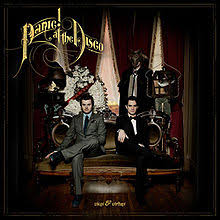
Panic! At The Disco has explored a range of styles throughout their music, including but not limited to rock, pop, punk-pop, folk, and more. “Vices and Virtues” (the album “Nearly Witches” is on) is composed of many different genres, all of them kind of blended throughout the songs. In my opinion, the main genres visible in “Nearly Witches” are pop, due to the structure and repetitive lyrics; rock due to the percussion back-beats and electric guitar; and a kind of alternative genre because of the instrumentation throughout the piece (synthesizer, piano, electric guitar, etc.) and how they are used together. Also, “Vices and Virtues” was the first album with only Brendon Urie and Spencer Smith; “Nearly Witches” was worked on a bit before half of the band separated, but the remaining duo had to rewrite and alter the song.
Before analyzing any of the transitions or lyrics (because they seem like gibberish unless you’ve listened to the song in depth), here’s a quick overview of what “Nearly Witches” is about: essentially, the song is about a guy who is infatuated with a girl, but can’t express what he feels to her. The girl never really notices the guy or how he feels, resulting in the guy being haunted by the regret of not pursuing the relationship and the memory of the girl.
The song begins with a quirky synth/string/electric intro (at first listen, it seems a little odd, but it really grows on you) that’s in French and sung by a children’s choir. According to AZ Lyrics.com (I can’t speak French so I hope this is somewhat accurate), the lyrics mean:
“From the first day, Your perfume intoxicates me, my love, It is in these moments, I want to be like you at times, But since that day, I have a single regret”
This makes since and corresponds with the chorus of the song later on. The beginning of the song is really legato and smooth, and it makes it feel like the song is from a dream or memory.
Then, about 4 and a half measures after the intro lyrics, the tone completely changes from this ballad to a rock song. Like, sure, there’s a bit of drums after the lyrics, but this time this electric guitar just starts playing and completely changes the tone of the song from a legato to a staccato feel, and it really turns into a bop.
So now there’s this harsh, rock feel that contrasts the flowery intro. Then the lyrics come in again (this time lead-vocalist Brendon Urie); while the rock carries on with the lyrics and instrumentation, there’s piano flourishes in the background. I really love how the song contrasts musically from the love-sick ballad parts to the raging, almost frustrated overtones, while still incorporating aspects of each emotion/part within each other. This song to me musically captures the story perfectly- when you adore someone and they don’t reciprocate your feelings. There are so many emotions from the “main character” in a way; on one hand, he’s completely obsessed with this girl, so the song is a ballad to her- at the same time, he’s mad at himself because he regrets that this relationship never happened and all he can do is dream- he’s also somewhat “mad” or at least frustrated that this girl never recognized his feelings, and they went unnoticed. All of the genres in the song incorporated into one another creates this complex feel and song, and truly represents how complicated love and romance can be.
So, after the first verse and chorus (which is composed in the love-ballad theme), the lyrics go “And that one regret is you.” And in that moment, the story’s completely laid out to the listener; then, there’s a brief pause and then a vibraslap (percussion instrument) boings to transition to the next verse, which is extremely rhythmic. It’s very chant-like, and in the background is a syncopation rhythm created on what sounds to be drumsticks. I don’t know all of the technical lingo to explain this section, but I just find it’s really cool to listen to.

The chorus repeats again, and at the end of the song (or the outro), the children’s choir is singing faintly in the background. Now, this doesn’t sound like it’s extremely important, but it’s a bit of an Easter Egg/transition to another song (“The Ballad of the Mona Lisa“) as the lyrics fading out are “Mona Lisa, pleased to please ya.”
I could go on for pages nerding-out on this song, but I think it’s better to leave the rest to individual interpretation, as that is part of the beauty of this song.
I hope that you’ve found this post to be helpful in either finding a good song to listen to, or making sense of “Nearly Witches.” Stayed tuned for more posts, and keep feeling good vibes!
– SBR
 Good Vibes